



What Bhagavad Gita Teaches About Life, Clarity, and Inner Peace
Introduction: When Life Feels Confusing and Heavy
There are phases in life when everything feels unclear.
You try to make the right decisions, yet doubt follows.
You try to stay emotionally strong, but your thoughts feel overwhelming.
You want to move forward, but something inside keeps holding you back.
And in those moments, one quiet need begins to rise above everything else:
“I just want clarity.”
Not more opinions.
Not endless advice.
Just clarity.
________________________________________
A Conversation That Still Feels Relevant
The Bhagavad Gita is often viewed only as a religious text.
But at its heart, it is a profound conversation about confusion, responsibility, emotional conflict, and inner balance.
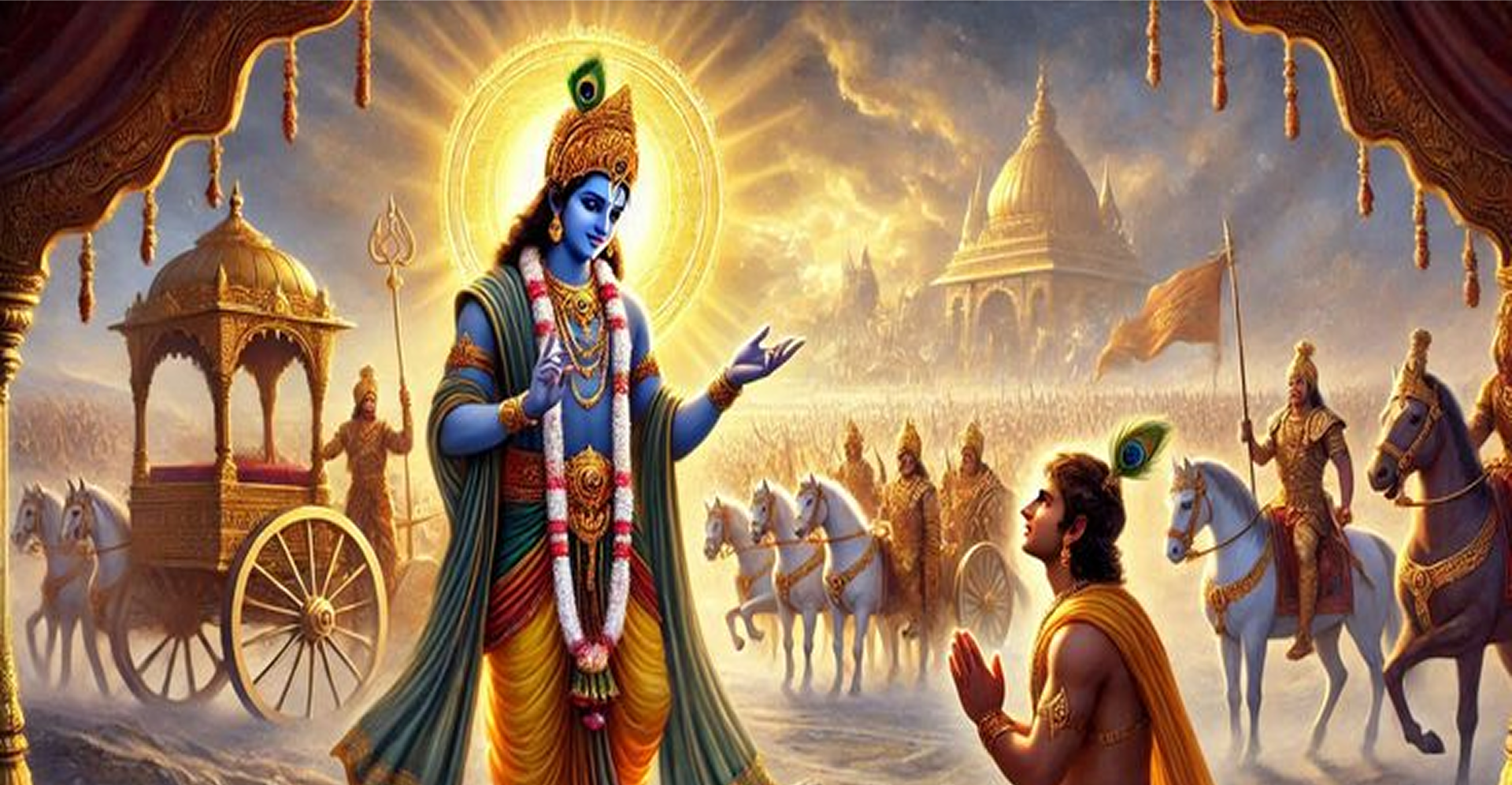
The dialogue begins with Arjuna standing in a moment of deep emotional struggle.
He feels:
● Overwhelmed by emotion
● Unsure about what is right
● Unable to act despite understanding his responsibilities
And that is what continues to make the Gita deeply relatable even today.
________________________________________
The Core Teaching: Clarity Over Confusion
One of the central ideas of the Gita is:
Act with clarity, not emotional disturbance.
It teaches that:
● Confusion clouds judgment
● Emotional overwhelm reduces awareness
● Overthinking delays meaningful action
The Gita does not suggest avoiding difficult situations.
Instead, it encourages understanding your role clearly and responding with awareness rather than emotional chaos.
________________________________________
Understanding Detachment in a Balanced Way
The Gita speaks often about Vairagya, or detachment.
This idea is frequently misunderstood.
Detachment does not mean becoming cold, emotionless, or indifferent.
It means:
Not allowing your peace to depend entirely on outcomes.
You still care.
You still act sincerely.
You still put in effort.
But your inner stability is not completely controlled by success, failure, or external results.
This perspective gradually reduces:
● Anxiety
● Fear of failure
● Emotional instability
● Constant pressure
________________________________________
The Balance Between Effort and Acceptance
Another important teaching of the Gita is:
Focus on your effort, not complete control over the result.
Because outcomes are influenced by many factors, including:
● Timing
● Circumstances
● Other people
● Conditions beyond your control
This teaching does not reduce responsibility.
Instead, it removes the emotional burden of trying to control everything.
________________________________________
Why These Teachings Still Matter Today
Modern life often brings:
● Overthinking
● Emotional exhaustion
● Decision fatigue
● Lack of direction
The Gita does not offer quick fixes.
What it offers is:
● A way to think more clearly
● A way to act with awareness
● A way to remain emotionally steady during uncertainty
________________________________________
When Guidance May Help
Sometimes, understanding these teachings deeply requires guidance and interpretation.
Through HappinessCue, individuals can connect with spiritual mentors and Gita-based life guides who help simplify these teachings and apply them to everyday life.
Their guidance can help you:
● Find clarity during difficult phases
● Apply wisdom practically
● Build emotional steadiness and inner balance
________________________________________
Final Thought
The Bhagavad Gita does not try to change your life overnight.
It helps you understand yourself, your actions, and your inner conflicts more clearly.
And often, when understanding deepens, clarity follows naturally.
And when clarity comes, your actions begin to align with greater peace and awareness.